
Understanding Liabilities: Definitions, Types, and Key Differences From Assets
-
Paco
- Posted on
- 0 comments

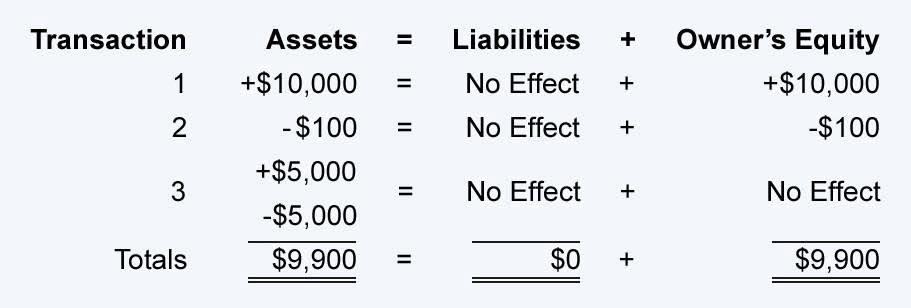
The $5000 cash is an asset are liabilities expenses for Jack that he can use to start his business. He now also has a liability of the same amount that is owed to his friend. For example, if a business buys goods on credit from its supplier, it has a legal obligation to pay the supplier cash in the future. All of the above assets provide economic benefits to the owners or users.
Are utility bills an expense or a liability?

This expenditure covers something (electricity) that only had utility during the billing period, which is a past period; therefore, it is recorded as an expense. Conversely, the company buys a machine, which it expects to use for the next five years. Since this expenditure has utility through multiple future periods, it is recorded as an asset. Payments for advertising, equipment repairs, utilities, and rent are liabilities. Suspense Account When an owner withdraws cash from the business, the transaction affects both assets and owner’s equity. A negative amount for net worth would reflect more debt than assets, something a creditor would favor.

Surely, Expenses Must Be Equity?
Master expense classification What is bookkeeping and boost your financial know-how. Accurate classification between liabilities and expenses is essential for clear financial records, compliance, and better business decision-making. Misclassifications can lead to skewed financial ratios, impacting a company’s perceived profitability, liquidity, and overall financial stability.
- Click Chart of Accounts to access a google spreadsheet that you can download and use during the course.
- Both expenses and liabilities tend to create a monetary obligation for any entity.
- Among the five elements of financial statements, assets, liabilities and owner’s equity can be found in the balance sheet while revenues and expenses can be found in the income statement.
- There are three different classes of accounting which are Financial Accounting, Cost Accounting, and Management Accounting.
- Customer prepayments provide cash upfront, counted as an asset.
Difference 4: Impact on profits and cash flow
- Assets result in the inflow of valuable resources to its owners or users, whereas liabilities cause an outflow of valuable resources from the borrower.
- They are reported on the income statement, impacting net profits.
- In our example, the utility bills for gas and electricity used in December are both an expense and a liability as of December 31.
- Examples of recurring expenses include salaries, rent, utilities, and marketing costs.
- The expense is accumulated in a cost pool and then allotted to the units produced within a given period when the expense is incurred.
With BILL Spend & Expense, teams can enjoy automated expense tracking and reporting. Importantly, these classifications are not exclusive, meaning that an expense can be both a variable and an operating expense. Ramp’s automated expense management platform tackles these classification challenges head-on. The platform’s intelligent categorization engine automatically recognizes and properly classifies transactions based on vendor data and spending patterns.

Managing liabilities helps you decide what risks to take for growth. Companies often use accounts payable or lines of credit to fund operations without cutting into profits. Keeping liabilities under control improves financial stability and supports future investments.

How to use a business credit card
- Individual transactions which result in income and expenses being recorded will ultimately result in a profit or loss for the period.
- In those cases, the credit entry will involve cash/bank accounts.
- At the end of the accounting period, these accounts get closed out and their balances are transferred to retained earnings (part of equity).
- You report the quoted investments in the balance sheet at their current value, not the price you paid for them.
- Therefore, when you accrue an expense, it appears in the current liabilities portion of the balance sheet.
- This is where the company reports the portion of its net income obtained through investments made with surplus cash instead of being earned in its usual line of business.
Strong asset management and paying off debts steadily help build better trust with creditors over time. For example, a ratio of 0.3 means only 30% of your assets are funded by debt, showing good stability. Use a line of credit with lower rates to pay them off faster.